
67% of marketers now agree that consumers discover brands through AI and social platforms — not traditional Google search. If your strategy still leads with keyword rankings, it’s already a year behind.
Across 100+ strategy conversations our team has had with founders, CMOs, and small business owners over the past year, one pattern keeps showing up: the rules changed faster than most playbooks could keep up.
This guide cuts through the noise. Here are the 9 digital marketing trends that genuinely matter for 2026 — what each one means, why it matters for your business, and the practical first step to take this quarter.
Why 2026 Is Different from Every Year Before It.
The last decade of digital marketing was built on a stable foundation: Google ranks pages, ads target keywords, social media drives traffic. That foundation has cracked.
AI-powered search now answers questions directly. Consumers move fluidly between TikTok, ChatGPT, Google, and YouTube without thinking of them as separate channels. Privacy regulations have made third-party data unreliable. And generative AI has lowered the cost of producing average content to near zero — making distinctive, human content more valuable than ever.
The marketers who will win in 2026 are those who adapt to multi-surface visibility — showing up wherever their customers happen to look — rather than optimising for a single platform.
For an industry-level read on what’s coming, Google’s 2026 marketing trends report from Think with Google offers useful context drawn from global consumer research.
The 9 Digital Marketing Trends That Will Shape 2026
1. AI-Powered Search and Generative Engine Optimisation (GEO)
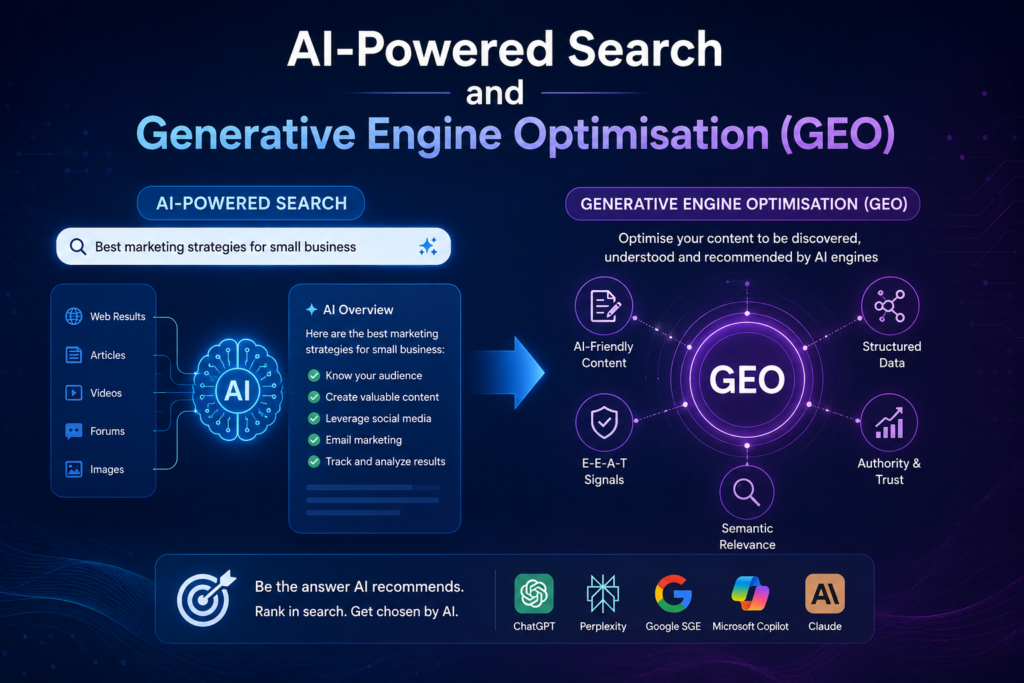
Generative Engine Optimisation (GEO) is the practice of structuring your content so that AI search engines like ChatGPT, Perplexity, Gemini, and Google’s AI Overviews can extract, cite, and recommend it. It is the natural successor to traditional SEO — and in 2026, it is no longer optional.
With half of all consumers already using AI-powered search, the goal is no longer just to rank #1 on Google. The goal is to be the source the AI quotes when someone asks it a question.
How to act on it:
- Add clear, definition-style sentences to your most important pages — AI engines extract these as direct answers
- Use structured data (Schema.org) to mark up FAQs, products, articles, and reviews
- Establish clear authorship and expertise signals on every blog post — AI favours traceable expertise
- Test how AI engines summarise your pages by asking ChatGPT or Perplexity to describe your service — gaps in their summaries reveal content gaps to fix
2. The Collapse of Channel Boundaries
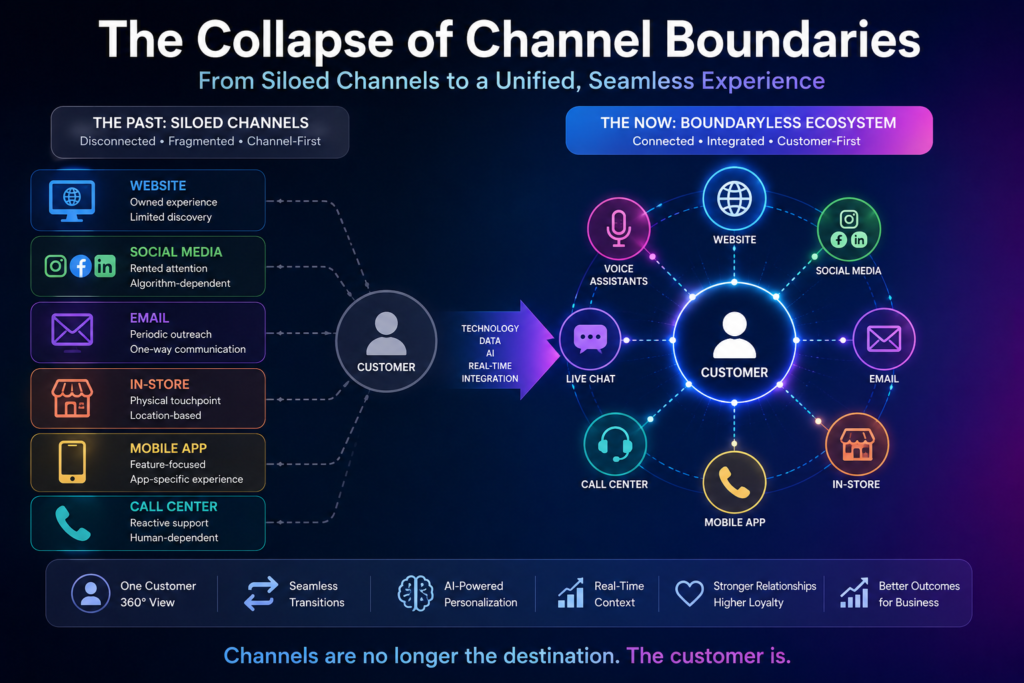
Customers no longer think in channels. They watch a Reel, ask ChatGPT a follow-up question, read a Google Discover snippet, then click through to a YouTube review — all in the space of an evening. For marketers, this means visibility can no longer be measured one platform at a time.
What this looks like in practice:
- A blog post must work as a Google search result, an AI citation source, and a LinkedIn share simultaneously
- Brand consistency across surfaces — visual identity, tone, and messaging — matters more than peak performance on any single one
- Cross-platform measurement frameworks are replacing single-channel KPIs
The takeaway: stop building campaigns. Start building presence.
3. Authentic, Human-Led Content Wins (“Anti-Slop”)
Online mentions of “AI slop” rose more than 200% in 2025 as audiences became visibly tired of generic, mass-produced AI content. Engagement is shifting decisively toward content that feels purposeful, specific, and unmistakably human.
Brands that treat AI as a creativity multiplier — not a replacement for thinking — are pulling ahead. Those that publish AI output unchanged are losing trust and engagement at the same time.
How to use AI without producing slop:
- Use AI for research, drafting outlines, and editing — not for writing the final voice
- Pair every AI-assisted piece with genuine human expertise, examples, and points of view
- Show your face, your team, and your real customers — visual humanity now drives engagement more than polish
- Add specifics: case studies, real numbers, named clients (with permission), and direct quotes
4. Short-Form Video as the Default Discovery Engine
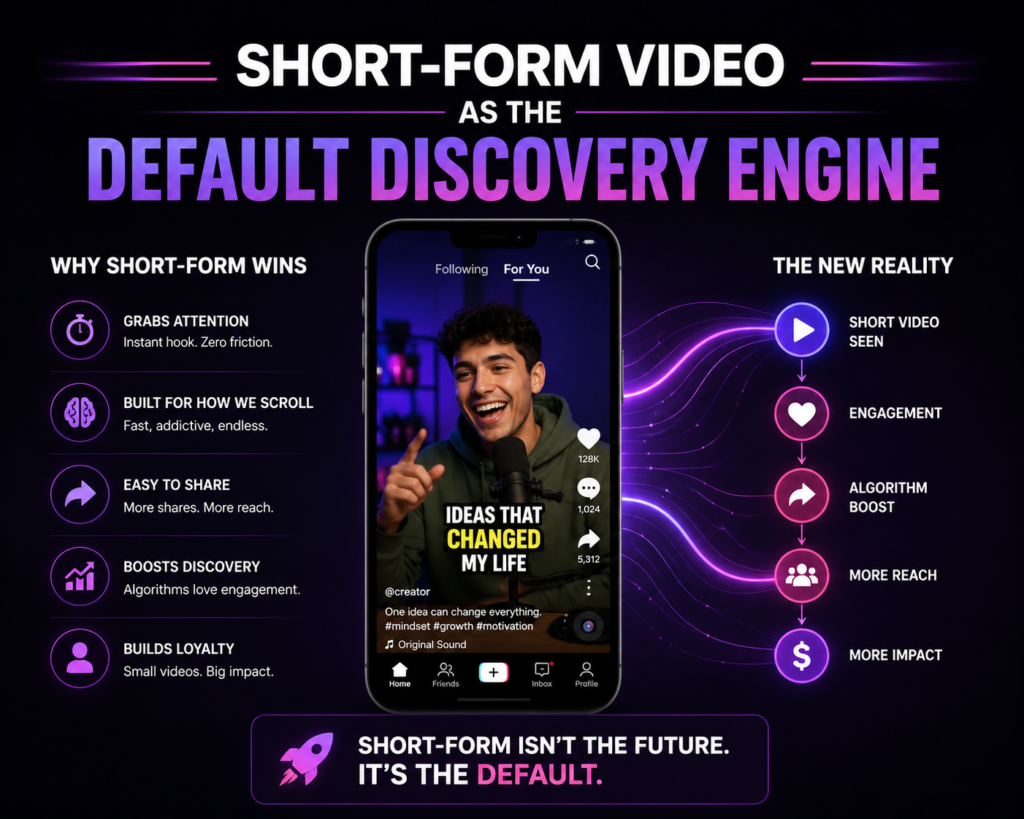
Instagram Reels, YouTube Shorts, and TikTok have moved from “a channel” to the primary discovery surface for younger and middle-market audiences. Even B2B buyers report finding new vendors through short-form video.
For 2026, short-form video is no longer something you add to a strategy — it is the strategy’s default starting point.
Practical priorities:
- Produce 3–5 short-form videos per week consistently rather than one polished video per month
- Use captions on every video — 85% of short-form content is watched on mute
- Build a content engine around your team’s existing knowledge: client questions, common mistakes, behind-the-scenes process
- Repurpose every video across Reels, Shorts, and LinkedIn — it’s the same upload effort with multi-platform reach
5. First-Party Data and Privacy-First Marketing
Third-party cookies are effectively gone. Privacy regulations — including GDPR in Europe, India’s Digital Personal Data Protection Act, 2023, and equivalents in other regions — have made aggressive data harvesting a legal and reputational risk.
First-party data is information collected directly from your own customers and audience — through email signups, account creations, surveys, and on-site behaviour. In 2026, it is the most valuable marketing asset most businesses will own.
How to build a first-party data engine:
- Create a genuine reason for visitors to share their email — a useful resource, calculator, or template
- Ask permission transparently and explain what subscribers get in return
- Implement Consent Management Platforms (CMPs) and Google Consent Mode for compliance
- Use this data to personalise email and on-site experience, not for invasive retargeting
6. Conversational and AI-Assisted Customer Experience
WhatsApp Business, AI-powered chatbots, and live chat have replaced contact forms as the preferred way customers want to interact with brands. Speed of response is now a ranking factor for customer experience.
For Indian businesses especially, WhatsApp is the dominant conversational channel. Setting up the WhatsApp Business Platform, with a clear menu and AI-assisted responses for common queries, can dramatically improve lead conversion.
Where to start:
- Audit your customer’s first-message experience — how fast does someone hear back, and is the reply useful?
- Use AI chatbots for the top 10–20 most common questions; route everything else to a human
- Track conversational conversion: how many chats lead to a booking, sale, or qualified lead
7. Niche Communities Beat Mass Audiences
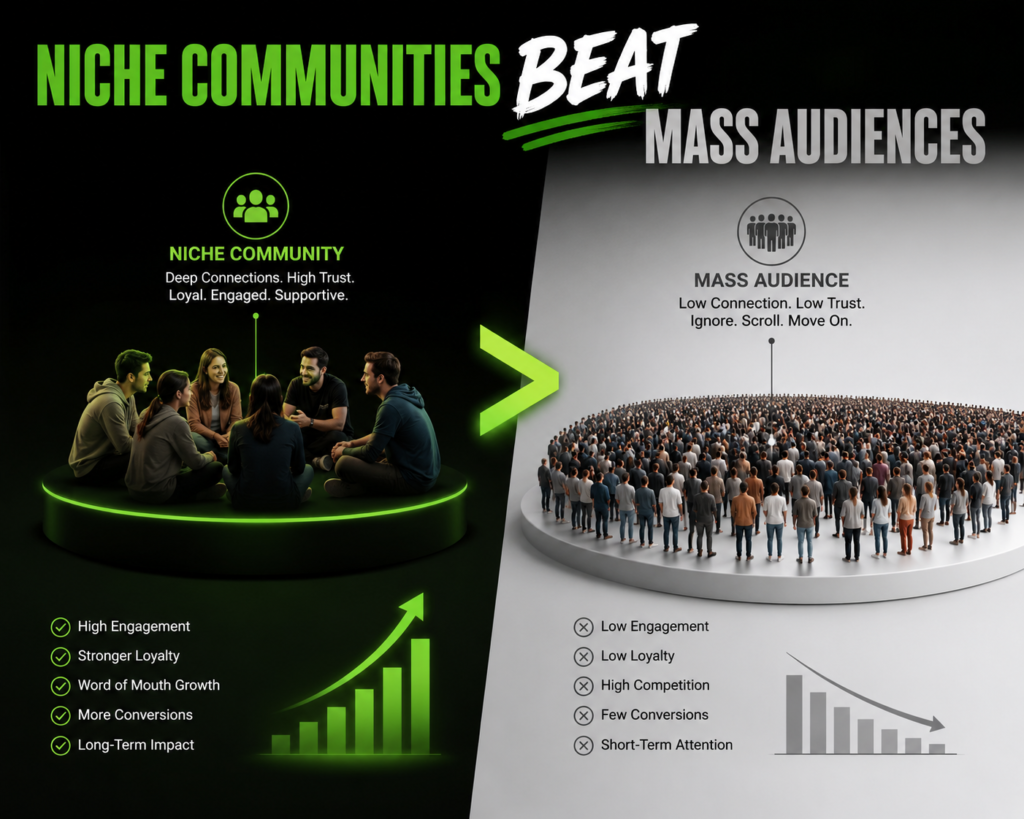
The audience growth model that ruled the 2010s — chase the largest possible following — is decisively losing to specialisation. In 2026, a tightly defined audience of 5,000 truly engaged people is more valuable than 500,000 passive followers.
Micro-communities on Discord, Telegram, LinkedIn groups, and private Slack workspaces are where high-trust brand relationships now form. Customers who feel they belong buy more, refer more, and stay longer.
How to build community without burning out:
- Pick one platform where your specific audience already gathers
- Show up consistently with useful content rather than promotional posts
- Encourage member-to-member conversation — your role is to facilitate, not perform
- Celebrate community members publicly: a tagged customer story is worth ten anonymous case studies
8. Employee-Led and Influencer-Powered Branding
LinkedIn data shows that posts shared by employees get roughly double the click-through rate of the same post shared by the company account. Yet only about 3% of employees actively share company content.
The brands winning in 2026 are turning that gap into a strategy. Empower a few key team members — your founder, sales lead, technical experts — to build authentic personal brands. Their reach compounds the company’s.
Alongside this, micro-influencer partnerships continue to outperform traditional celebrity endorsements for most product categories. Audiences trust someone who looks like them more than someone famous. Learn how this fits into a broader strategy in our guide on influencer marketing services in India.
9. Measurable, AI-Enhanced Marketing Operations
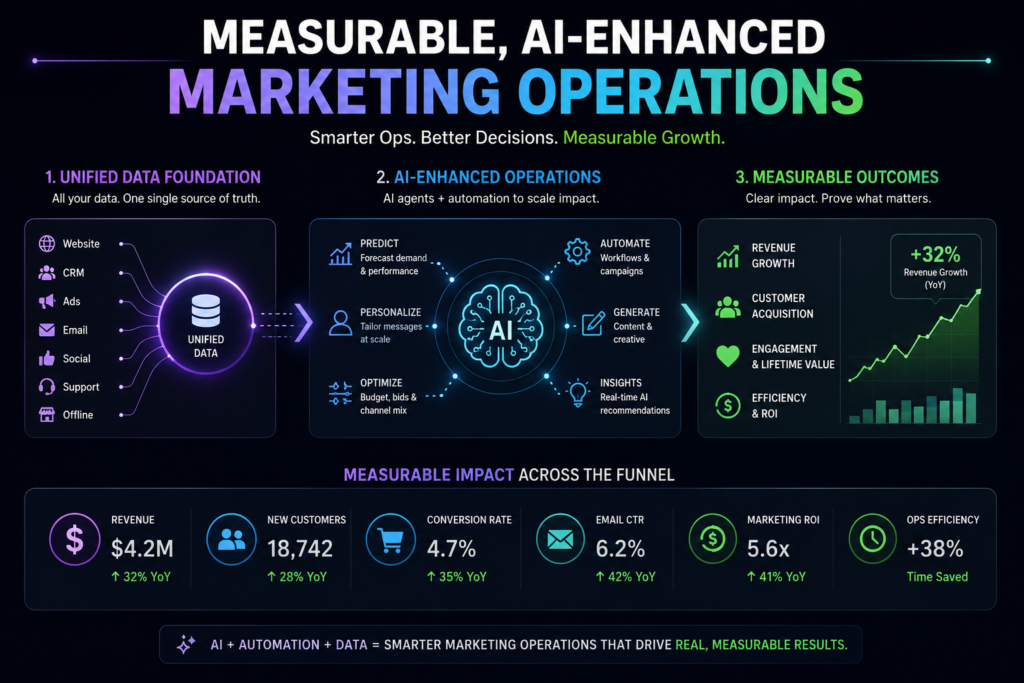
The measurement crisis from 2024–2025 — third-party cookies dying, attribution breaking down, marketing mix modelling making a comeback — is settling in 2026 around a more mature toolkit.
Modern AI tools now help marketers do three things at once: produce more relevant content, predict campaign performance, and attribute results across messy multi-channel journeys.
Practical applications worth adopting in 2026:
- AI-assisted creative testing — running 20+ ad variants without 20x the effort
- Predictive lead scoring — focusing sales effort on leads most likely to convert
- Real-time content performance analysis — seeing which blog sections, video moments, or email lines actually drive action
- Marketing mix modelling — replacing broken last-click attribution with a probabilistic view of channel contribution
The principle: use AI to amplify what your team already does well, not to replace strategic judgement.
For more on the practical use of AI tools in marketing, see our deeper read on how AI tools can boost your digital marketing ROI.
Quick Reference: Your 2026 Digital Marketing Action List
- Add definition-style sentences and structured data to your top 10 pages for GEO
- Audit your brand presence across Google, AI engines, and at least 2 social platforms
- Replace one piece of generic content this month with something genuinely human
- Commit to a short-form video schedule of 3–5 posts per week
- Set up or improve your first-party data capture (newsletter, lead magnet)
- Implement WhatsApp Business or a chatbot for your top 10 customer questions
- Choose one community platform and commit to 90 days of consistent engagement
- Equip 1–3 team members to actively post on LinkedIn or relevant platforms
- Pilot one AI tool that genuinely saves time on a recurring marketing task
Pick three of these to focus on this quarter. Trying to do all nine at once is a familiar way to do none of them well.
For ongoing industry data and predictions, Statista’s digital marketing research portal is a reliable reference for tracking how these trends evolve through the year.
Frequently Asked Questions
What is the biggest digital marketing trend in 2026?
The biggest single shift is AI-powered discovery — consumers using ChatGPT, Perplexity, Gemini, and Google’s AI Overviews to find brands rather than typing keywords into a traditional search box. The marketing response is Generative Engine Optimisation (GEO): structuring content so AI engines can confidently cite and recommend it. Brands that adapt early will own visibility in the new search surface.
What is Generative Engine Optimisation (GEO)?
Generative Engine Optimisation (GEO) is the practice of optimising your website content so that AI search engines such as ChatGPT, Perplexity, Gemini, and Google AI Overviews can extract, summarise, and cite it accurately. Unlike traditional SEO, which targets keyword rankings, GEO focuses on clear authorship, structured data, definition-style answers, and authoritative content that AI systems can confidently recommend.
Is SEO still relevant in 2026?
Yes — but the definition has expanded. Traditional SEO (technical health, quality content, backlinks) still drives organic traffic and remains the foundation. What has changed is that the same content now also needs to satisfy AI search engines, which apply slightly different signals around authorship, structure, and entity coverage. SEO and GEO are best understood as one combined discipline in 2026, not two separate ones.
How is AI changing digital marketing in 2026?
AI is reshaping digital marketing in three primary ways: how customers discover brands (AI search and recommendations), how content is produced (AI-assisted writing, design, and video), and how campaigns are measured (predictive analytics and attribution modelling). The marketers who win combine AI for scale with human judgement for strategy and authentic creative direction.
Should small businesses invest in short-form video?
Yes — short-form video is one of the most accessible high-impact channels for small businesses in 2026. The format rewards consistency and authenticity over production budget. A small business owner posting 3–5 short videos a week using a smartphone, captions, and a clear point of view will typically outperform a large brand posting once a week with high production values. Platforms favour creators who post often and engage with comments.
How much should a business spend on digital marketing in 2026?
Industry benchmarks vary, but most businesses allocate between 7% and 12% of revenue to marketing, with digital channels taking the majority share. The more useful question is allocation: how the budget is split between SEO/GEO, paid media, content, video, and tools. A balanced 2026 budget typically protects organic and content investment (which compounds over time) while using paid media to accelerate proven funnels.
What’s the easiest digital marketing trend to start with this year?
Adding clear, well-structured FAQ sections and definition-style sentences to your existing top pages. This single change improves traditional SEO performance, helps AI engines cite your content, and directly answers customer questions — all without producing any new pages. Most businesses can implement this on their five highest-traffic pages in under a week.