
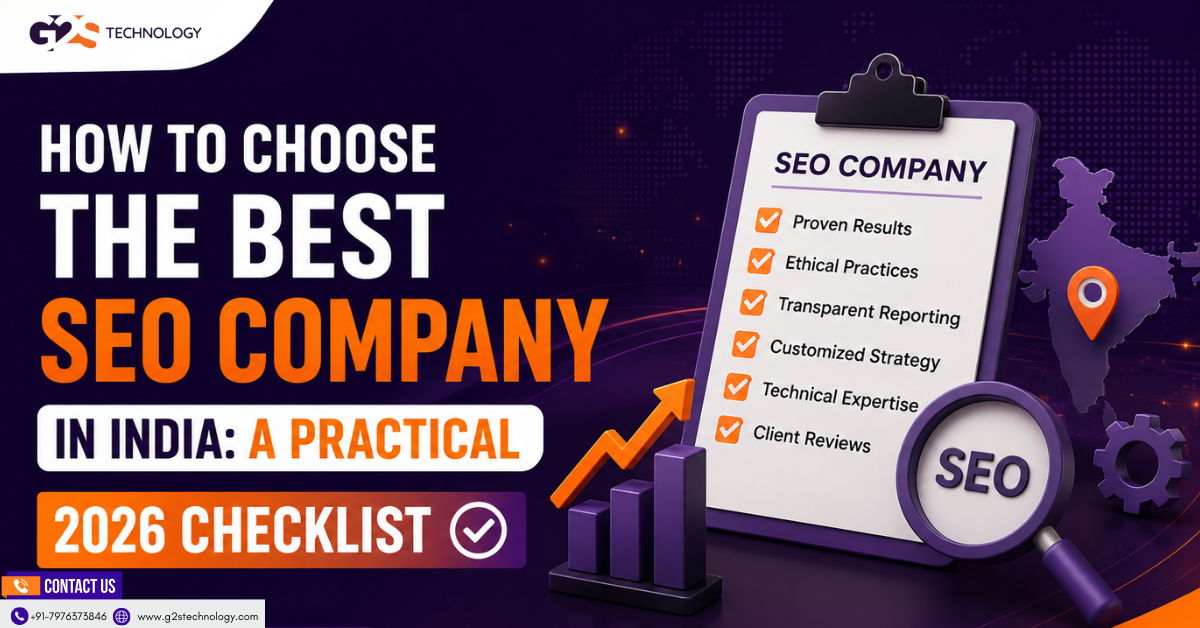
We have had direct conversations with over 100 business owners and marketing professionals who came to us after a bad agency experience — lost rankings, wasted budgets, and in some cases, Google penalties from black-hat link building. Most of them said the same thing: “We did not know what to look for.”
This guide gives you exactly that — a structured, experience-backed framework to evaluate and hire the right SEO partner in India. By the end, you will know the right questions to ask, the warning signs to avoid, and how to assess an agency’s real capability before signing a contract.
What Is an SEO Company and What Should One Actually Do for You?
An SEO company is a specialised digital marketing agency that improves a website’s visibility in organic (unpaid) search engine results through technical optimisation, content strategy, and authority building.
The definition is straightforward. What is less obvious is what a genuinely capable SEO agency does differently from one that just generates reports and charges a monthly fee.
A quality SEO company in India should:
- Conduct a thorough technical and content audit of your existing website
- Build a keyword strategy aligned with your business goals — not just search volume
- Optimise on-page elements including title tags, meta descriptions, content structure, and schema markup
- Develop or guide content creation that serves both search intent and your audience’s needs
- Build high-quality backlinks from relevant, authoritative websites
- Track and report on metrics that connect directly to revenue — not just rankings and traffic
Understanding this scope helps you ask better questions. For a deeper look at what full-service SEO involves, explore our SEO services in India.
Why Choosing the Wrong SEO Agency Is an Expensive Mistake
The India SEO market is large, and the quality range is enormous. On one end, you have experienced teams with documented results. On the other, you have agencies that sell packages built around keyword stuffing, purchased link farms, and automated content — tactics that Google has actively penalised for years.
Recovering from an algorithmic penalty or a manual action from Google can take 6 to 18 months, during which your organic traffic — and with it, your leads — essentially disappears.
According to Google’s Search Essentials, practices like buying links, cloaking content, or using manipulative redirects can result in a site being removed from Google Search entirely. This is not a theoretical risk — it happens regularly.
The cost of a bad hire is not just the monthly retainer. It is the compounded revenue loss during the recovery period.
Factor 1 — Align Their Mission With Their Actual Work
Almost every SEO agency website says something like ‘we deliver results-driven, transparent digital marketing. That is table stakes, not differentiation. What matters is the gap between what they say and what they do.
When you visit an agency’s website, ask yourself:
- Do their blog posts and resources demonstrate real expertise, or are they superficial keyword articles?
- Are their own SEO rankings strong — does their website rank for the keywords they claim to target?
- Do their stated values — transparency, results, communication — show up in how they present themselves to prospects?
An agency that cannot apply good SEO to their own website is unlikely to apply it effectively to yours. This is a basic but often overlooked filter.
Factor 2 — Evaluate Case Studies and Portfolio Depth
Reviews build initial trust. Case studies reveal capability. There is a significant difference.
A well-constructed case study should tell you:
- The client’s industry, starting position, and specific challenge
- The strategy the agency developed and why
- The specific tactics executed — and the timeline
- The measurable outcomes: ranking improvement, organic traffic growth, lead volume, or revenue impact
- How long the results have held since implementation
Generic testimonials like ‘they doubled our traffic’ tell you almost nothing without context. Push for specifics. Ask whether you can speak directly with one or two past clients — agencies with genuine results are usually comfortable making that introduction.
You can review G2S Technology’s own client case studies to see the level of detail and transparency we hold ourselves to.
Factor 3 — Ask the Right Questions Before You Sign Anything
The questions you ask during the sales process reveal as much about an agency as their portfolio does. A confident, capable agency welcomes hard questions. An agency trying to hide something will deflect, give vague answers, or pivot to pricing.
Here are the seven questions we recommend every business owner ask — and what the answers reveal:
| Question to Ask | What It Reveals |
| How do you stay current with Google algorithm updates? | Shows whether they invest in ongoing learning vs. using outdated tactics. |
| Can you share case studies for businesses similar to mine? | Reveals real-world experience in your industry or market segment. |
| What does your reporting look like and how often do we meet? | Sets expectations for transparency and communication cadence. |
| How do you approach on-page SEO and technical audits? | Tests depth of technical knowledge beyond keyword stuffing. |
| What link-building methods do you use? | Critical — black-hat link building can penalise your site. |
| What does a realistic timeline look like for our goals? | Honest agencies give a range; those guaranteeing quick wins are a red flag. |
| How will you adapt your strategy to our specific niche? | Confirms they will build a custom plan, not apply a template. |
Pay attention to how they respond as much as what they say. Confidence without specifics is a warning sign. Honest acknowledgement of timelines and limitations is a green flag.
Factor 4 — Assess Their Customer-First Operating Philosophy
SEO is a long-term investment, which means the relationship you build with your agency matters as much as their technical skill. You will be working with these people for months or years. The question is: do they operate like a partner or like a vendor?
Signs of a customer-first agency:
- They educate you — explaining what they are doing and why, rather than keeping strategy opaque
- Their social media and blog content adds value to their audience, not just promotional noise
- They flag potential risks proactively rather than waiting for something to go wrong
- Their account management structure means you always know who to call when you have a question
- They push back on requests that would harm your long-term rankings — even if you are the client asking
The agencies our team has seen perform best over 3+ year relationships are the ones that treat client education as part of the service, not an afterthought.
Factor 5 — Test Their Ability to Navigate Competition and Algorithm Changes
SEO is not static. Google updates its core algorithm multiple times per year, and major updates like the Helpful Content Update and March 2024 Core Update have reshaped what ‘good SEO’ means practically.
According to Search Engine Journal’s algorithm update tracker, Google made over 4,000 changes to its search algorithm in a single recent year. Agencies that built their practice around outdated tactics find themselves scrambling after every major update.
Ask potential agencies:
- How did the last major Google core update affect your clients, and how did you respond?
- What is your process for monitoring algorithm changes in real time?
- Can you show an example where you proactively adjusted a client’s strategy ahead of an update?
The best agencies treat algorithm updates as a signal to improve quality — not a crisis to manage. Their strategies are built around Google’s long-term direction (genuine expertise, helpfulness, and trustworthiness) rather than short-term hacks.
Quick Reference: Red Flags vs. Green Flags When Choosing an SEO Agency
Use this table as a fast filter when comparing agencies side by side:
| 🚩 Red Flags — Walk Away | ✅ Green Flags — Good Sign |
| Promises guaranteed #1 rankings on Google | Sets realistic, measurable ranking goals |
| No case studies or client references available | Publishes detailed case studies with real metrics |
| Refuses to explain their link-building methods | Explains tactics clearly; avoids black-hat techniques |
| Locks you into 12-month contracts with no exit clause | Offers flexible month-to-month or short-term contracts |
| Reports only vanity metrics (traffic, impressions) | Reports conversions, leads, and revenue-linked KPIs |
| One-size-fits-all SEO packages | Custom strategy based on your industry and goals |
| Slow or absent communication after onboarding | Dedicated account manager + monthly strategy calls |
Factor 6 — Understand Pricing Without Getting Distracted By It
Price is the most visible variable when comparing SEO agencies — and often the least meaningful one. Paying less does not protect you from a bad outcome, and paying more does not guarantee a good one.
What matters is what you get for the investment:
- Cheap packages (under ₹5,000/month): Almost always involve templated work, minimal strategy, and tactics that will not move the needle — or worse, will eventually penalise you.
- Mid-range (₹15,000–₹50,000/month): Typically offers a dedicated team, custom strategy, and meaningful deliverables. This is the right range for most SMEs and growing businesses.
- Enterprise-level (₹50,000+/month): Appropriate for large sites, highly competitive markets, or businesses where organic traffic drives significant revenue.
Ask for an itemised breakdown of what each pricing tier includes. Then compare the deliverables — not just the numbers.
If you need help understanding what a realistic SEO investment looks like for your business size and goals, our team offers a free SEO consultation with no sales pressure.
Do You Need a Local SEO Specialist or a Full-Service Agency?
Not every business needs the same SEO approach. If you serve customers in a specific city or region — a restaurant, clinic, service provider, or retail store — a specialist in local SEO will deliver faster, more relevant results than a generalist agency targeting broad national keywords.
Local SEO is a distinct discipline that involves Google Business Profile optimisation, local citation building, and ranking for ‘near me’ queries. Our local SEO and Google Business Profile optimisation services are designed specifically for businesses that need to win locally, not just nationally.
If you operate across multiple cities or run an e-commerce business, a full-service national SEO strategy is the better fit. The right agency will tell you which approach fits your goals — and be specific about why
Frequently Asked Questions
How do I choose the best SEO company in India?
To choose the best SEO company in India, evaluate five key areas: their track record (verified case studies with measurable results), the transparency of their methods (white-hat tactics only), the quality of their communication and reporting, their understanding of your specific industry, and their pricing relative to deliverables. Avoid agencies that guarantee specific rankings or use vague language about their strategies.
How much does SEO cost in India?
SEO pricing in India varies significantly based on scope and agency quality. Small business packages typically range from ₹10,000 to ₹30,000 per month, while mid-market campaigns run ₹30,000 to ₹80,000 per month. Enterprise-level SEO for competitive industries or large sites can exceed ₹1,00,000 per month. Cheap packages under ₹5,000/month almost always involve low-quality or automated tactics that risk penalising your site.
How long does SEO take to show results in India?
Most legitimate SEO campaigns start showing measurable movement in organic rankings within 3 to 6 months. Significant traffic and lead growth typically takes 6 to 12 months depending on your starting position, the competitiveness of your keywords, and the quality of the work being done. Agencies that promise results in 30 days are almost certainly using tactics that will not hold.
What is the difference between a good and bad SEO company?
A good SEO company uses white-hat tactics aligned with Google’s guidelines, provides transparent reporting on metrics that connect to business outcomes, sets realistic expectations, and builds a custom strategy for your business. A bad SEO company typically promises guaranteed rankings, uses black-hat link-building methods, reports only vanity metrics, and applies the same template to every client regardless of their industry or goals.
Should I choose a local SEO agency near me or can I work with an agency anywhere in India?
Geography matters less than expertise and communication quality. Many highly effective SEO partnerships operate entirely remotely. What matters is that the agency has demonstrable experience in your industry, a clear communication process, and the capability to build content and links relevant to your target audience’s location. That said, for local SEO campaigns targeting a specific city, an agency with local market knowledge can be an advantage.
What questions should I ask an SEO company before hiring them?
The most important questions to ask are: (1) Can you share case studies from businesses similar to mine? (2) What link-building methods do you use? (3) How do you adapt your strategy to algorithm updates? (4) What does your reporting include, and how often do we review it together? (5) What is a realistic timeline for our goals? Honest, specific answers to these questions distinguish capable agencies from those selling promises.
Is it worth hiring an SEO company in India for a small business?
Yes — for most small businesses, professional SEO delivers a higher long-term ROI than paid advertising because organic traffic continues at no cost per click once rankings are established. The key is choosing an agency that offers a realistic scope for your budget rather than an undersized package that produces no meaningful results. Even a focused local SEO campaign can generate significant lead volume for a small business operating in a defined geographic area.