
Most major ad platforms ban or heavily restrict cannabis and CBD advertising. So how do these brands grow online without paid ads? The answer is SEO.
In this guide, you will learn what cannabis SEO is, why it is the most important channel for this industry, and how to build a compliant strategy that ranks. We have shaped this from 100+ business conversations our team has had with founders in regulated and competitive markets.
One thing up front: this is marketing guidance, not legal or medical advice. Always confirm the rules for your region.
What Is Cannabis and CBD SEO?
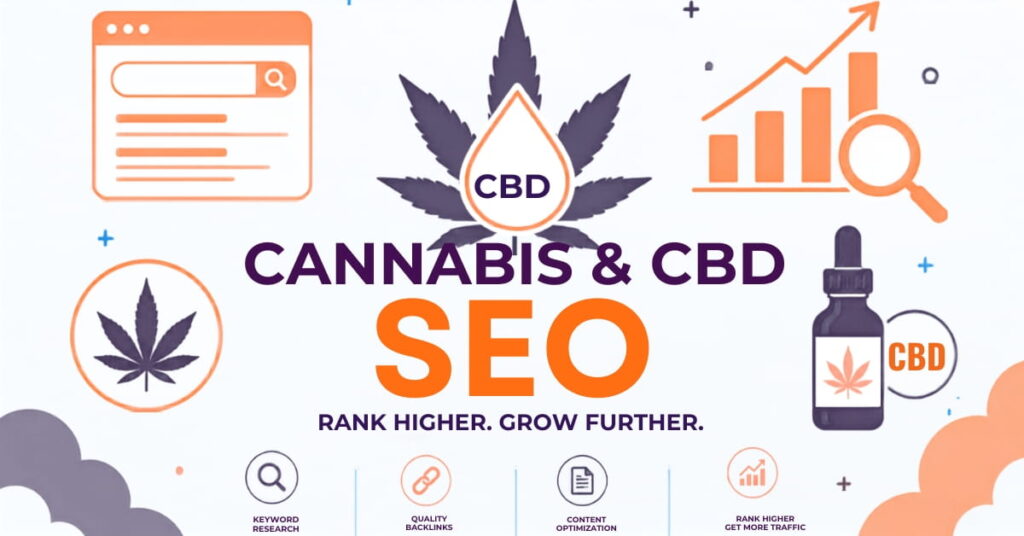
Cannabis and CBD SEO is the practice of optimising a cannabis, hemp, or CBD brand’s website so it ranks higher in search engines like Google and Bing for relevant, compliant keywords. It blends content, technical SEO, and link building.
Why it matters so much here: unlike most industries, cannabis and CBD brands cannot rely on paid ads. Google and Meta restrict or prohibit them. That makes organic search one of the few scalable ways to reach buyers, which is exactly why SEO is non-negotiable in this space.
Done well, SEO drives qualified organic traffic that turns into orders, subscriptions, calls, and form fills. Done poorly, or non-compliantly, it can get a site penalised. The difference is strategy.
Why SEO Is Crucial for Cannabis Brands
The legal cannabis and CBD market has grown fast in regions where it is permitted, especially North America. Industry forecasts have put North American cannabis spending in the tens of billions of dollars by the late 2020s, and the market keeps maturing.
With more brands entering, competition for visibility is fierce. Since paid ads are largely off the table, the brands that rank organically capture the demand. Early, consistent SEO builds an advantage that is hard for latecomers to overtake.
For context on where laws stand, the Wikipedia overview of cannabis legality is a useful neutral reference. Rules differ sharply by country and state.
Compliance Comes First
Before any keyword research, get your compliance right. This is a sensitive, heavily regulated category, and search engines apply extra scrutiny to it.
Three rules to build around:
- Know your jurisdiction. What is legal to sell and promote varies by country and state. Confirm the rules where your customers are, and consult a lawyer.
- Avoid health claims. Regulators like the US FDA restrict medical claims about CBD products. The FDA’s guidance on cannabis-derived products is worth reading before you publish.
- Vet your platform and payment providers. Make sure your hosting, CMS, and payment terms allow cannabis or CBD content and sales.
Because this is a “your money or your life” (YMYL) topic, Google weighs trust heavily. Google’s guidance on creating helpful, reliable content explains the experience, expertise, and trust signals that matter most here.
How to Build a Cannabis SEO Strategy
With compliance handled, here is a step-by-step framework that works for dispensaries, CBD brands, and accessory retailers alike.
1. Do Thorough Keyword Research
Keyword research reveals exactly what your audience searches for, so you can target real demand. Look at search volume, trends over time, and intent behind each term.
Prioritise keywords by:
- Monthly search volume and seasonal trends.
- Intent match (does the term fit your product or content?).
- Keyword difficulty and your site’s authority.
Group related terms into themes. This sets up the content clusters in the next step. Professional SEO services can speed this up with the right tools.
2. Build Content Pillars and Topic Clusters
Educational content is the engine of cannabis SEO. Around each main topic, publish a pillar page plus three to five supporting articles that link to it.
For example, a CBD brand might write a pillar on “CBD for beginners” supported by articles on dosage basics, product types, and how to read a lab report. This builds topical authority and gives readers genuine value, not just sales pitches. Our content marketing services can map these clusters for you.
3. Write Unique, SEO-Friendly Content
Original content is essential, especially in a YMYL niche. Write your own product descriptions and blog posts, never copied ones.
Strong cannabis content is:
- Built around carefully chosen keywords.
- Genuinely useful and accurate.
- Unique to your brand and voice.
- Free of unverified health claims.
Our guide on writing SEO-friendly content is a useful companion here.
4. Get Your On-Page and Technical SEO Right
On-page SEO aligns each page with its target keyword through titles, headings, meta descriptions, and internal links. Technical SEO makes sure search engines can crawl and index your site quickly.
Pay attention to site speed, mobile usability, structured data, and clean URLs. Our on-page SEO and technical SEO teams cover both foundations.
5. Build Authority With Quality Backlinks
Backlinks from trusted, relevant sites tell Google your brand is credible. In a competitive niche, authority often decides who ranks.
Focus on quality over quantity: industry publications, genuine partnerships, and digital PR. Avoid spammy link schemes, which carry real penalty risk. Our off-page SEO and link building services do this safely.
6. Use Local SEO for Dispensaries
If you run a physical dispensary, local SEO captures “near me” searches. Optimise your Google Business Profile, gather genuine reviews, and keep your name, address, and phone consistent everywhere.
Local intent is strong in this industry, so this can be one of your fastest wins. See our local SEO services for the full approach.
7. Keep Your Content Fresh
This market changes fast, from laws to products. Update your pages regularly so the information stays accurate and current.
Fresh, well-maintained content signals reliability to both readers and search engines. In a trust-sensitive niche, that upkeep directly supports your rankings.
How to Measure Cannabis SEO Success
SEO is a long game, so track the right metrics to know it is working. Focus on:
- Keyword rankings for your target terms.
- Organic traffic growth over time.
- Conversions: orders, sign-ups, calls, and form fills.
- Backlink quality and domain authority.
Expect meaningful movement over three to six months, with stronger gains as your content library and authority grow. Be wary of anyone promising instant top rankings; in a regulated, competitive niche, that is a red flag.
Final Thoughts
For cannabis and CBD brands, SEO is not just one option; with paid ads off-limits, it is the main road to growth. The brands that invest early in compliant, helpful content become the trusted names buyers and search engines rely on.
Start with compliance, build educational content clusters, and grow authority steadily. The work compounds, and so does the lead it gives you.
FAQ Section
What is cannabis SEO?
Cannabis SEO is the practice of optimising a cannabis, hemp, or CBD brand’s website to rank higher in search engines for relevant, compliant keywords. It combines content, technical SEO, and link building. It is the main growth channel because paid ads are largely restricted for this industry.
Why do cannabis brands rely on SEO instead of ads?
Major ad platforms like Google and Meta restrict or ban cannabis and CBD advertising. That leaves organic search as one of the few scalable ways to reach buyers. So SEO is essential, not optional, for visibility and sales in this space.
Is SEO allowed for cannabis and CBD websites?
Yes, optimising a website for search is allowed, but the rules depend on your jurisdiction and what you sell. You must follow local laws and avoid prohibited health claims. Always confirm the regulations for your region and consult a lawyer.
Can I make health claims about CBD on my site?
No, you should avoid unverified medical claims. Regulators like the US FDA restrict health claims about CBD products, and violating these rules carries legal risk. Focus on accurate, educational content instead of promises about treating conditions.
How long does cannabis SEO take to work?
Most brands see meaningful movement in three to six months, with stronger gains as content and authority build. It is a long-term strategy, not an overnight fix. Be cautious of anyone guaranteeing instant top rankings.
What content works best for CBD SEO?
Educational, original content works best, organised into pillar pages with supporting articles. Topics like beginner guides, product explainers, and how-to articles build authority and trust. Avoid copied content and health claims you cannot back up.
Do dispensaries need local SEO?
Yes. If you have a physical location, local SEO helps you appear in map results and “near me” searches. Optimise your Google Business Profile, earn genuine reviews, and keep your business details consistent everywhere.