
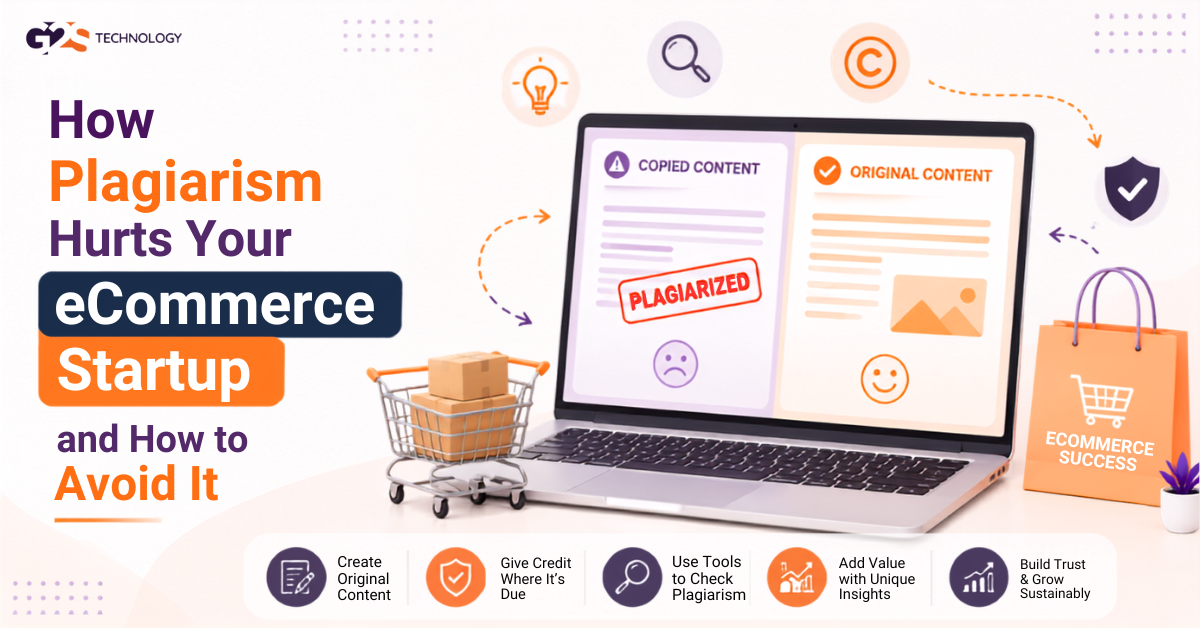
Would you buy from a store that copied its product descriptions word-for-word from a competitor? Most shoppers would not, and neither would Google.
In this guide, you will learn what plagiarism in eCommerce really is, how it quietly damages your trust, SEO, and sales, and exactly how to avoid it. We have shaped this from 100+ business conversations our team has had with founders and online store owners. No scare tactics. Just clear facts and practical fixes.
What Is Plagiarism in eCommerce?
Plagiarism is using someone else’s words, images, or ideas as your own without permission or credit. In an online store, it usually means copying product descriptions, images, or blog content from another website.
Three related terms often get confused, so let us clear them up, because the difference matters for both your SEO and your legal risk.
| Term | What It Means |
| Plagiarism | An ethical issue: passing off others’ content as your own. |
| Copyright infringement | A legal issue: using protected work without permission or a licence. |
| Duplicate content | An SEO issue: identical or near-identical text across pages or sites. |
They overlap, but they are not the same. Copying a competitor’s product description is plagiarism, may be copyright infringement, and creates duplicate content all at once. For the legal side, the U.S. Copyright Office and the Wikipedia overview of plagiarism are clear references.
Why Content Originality Matters for Online Stores
Your store is judged on trust. Shoppers research before they buy, and so do search engines. Original content signals that your brand is real, credible, and worth the purchase.
Copied content does the opposite. It tells customers you cut corners and tells Google your pages add nothing new. For a startup trying to earn its first thousand customers, that is a costly first impression.
Also Read This:- Top 10 Mobile App Development Companies in Jaipur
How Plagiarism Harms Your eCommerce Store
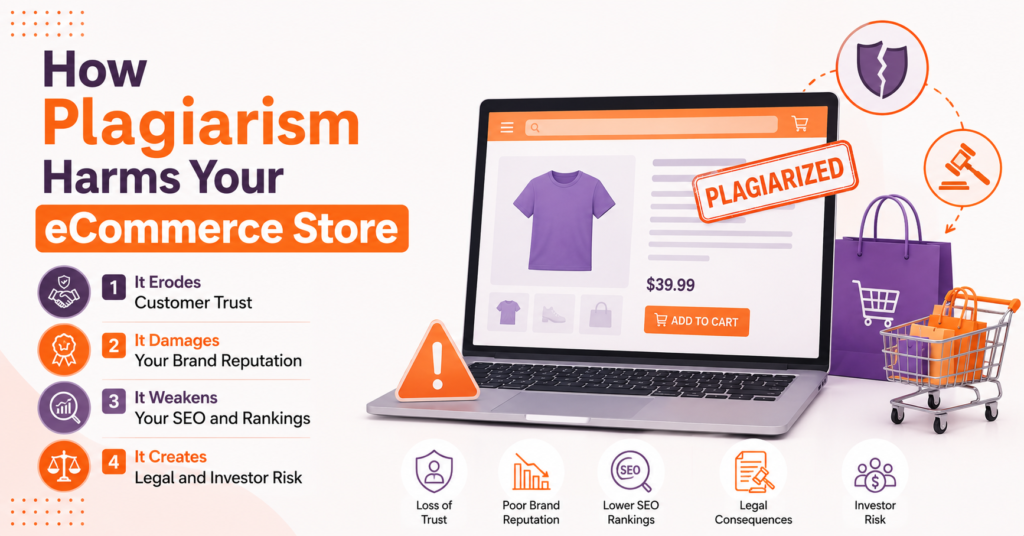
The damage shows up in four connected ways. Here is how each one plays out.
1. It Erodes Customer Trust
Shoppers often browse several sites before buying. If they spot the same description they read on another store, your credibility drops instantly.
The first thought is simple: “if the words are copied, maybe the products are too.” That doubt raises your bounce rate and quietly kills sales you never even see.
2. It Damages Your Brand Reputation
Reputation takes years to build and moments to lose. Customers today expect fresh, helpful, and honest content from the brands they support.
Once buyers label your store as unoriginal, that impression sticks. Winning back lost trust is far harder than earning it the first time, especially for a young brand.
3. It Weakens Your SEO and Rankings
Here is the accurate picture, since this is widely misunderstood. Google does not usually issue a direct “penalty” for ordinary duplicate content. Instead, it filters duplicates and picks one version to show, which means your page may simply not rank.
Worse, deliberately copying content at scale can trigger Google’s spam policies, including rules on scraped and scaled content. Original, helpful pages are what Google rewards, as explained in its guidance on creating helpful content. Strong on-page SEO starts with unique content.
4. It Creates Legal and Investor Risk
Copying protected text or images without a licence can expose you to copyright claims, takedown notices, or lawsuits. That is a real financial and time cost for any founder.
It also matters when you raise money. Investors run due diligence, and a brand built on borrowed content looks fragile. Original assets signal a defensible, fundable business.
The AI Twist: Why Originality Matters More in 2026
AI writing tools make it easy to spin out product descriptions in seconds. That convenience is a trap if you publish near-identical, low-effort content at scale.
Google’s spam policies now target scaled content abuse, whether it is written by a person or a machine. AI can assist your writing, but the final content still needs a human edit, real product detail, and a genuine brand voice. As AI search engines like ChatGPT and Perplexity cite sources, original and accurate content is what gets surfaced and trusted.
How to Detect and Avoid Plagiarism
The good news: avoiding plagiarism is straightforward once you build a few habits. Plagiarism is not always intentional, so a quick check protects you either way.
Check Text With a Plagiarism Checker
Run new product descriptions, blogs, and category pages through a reputable plagiarism checker before publishing. It flags any text that overlaps with existing sources so you can rewrite it.
Verify Images With Reverse Image Search
Use reverse image search to confirm your visuals are not copied from another site. For stock visuals, only use properly licensed or royalty-free images, and keep records of your licences.
Write Original Product Descriptions
Never paste a manufacturer’s or competitor’s description. Write your own, focused on real benefits, specifications, and use cases. Unique descriptions convert better and rank better. Our content marketing services can help you produce them at scale, and our guide on writing SEO-friendly content is a useful starting point.
Handle Legitimate Duplicates With Canonical Tags
Some duplication is normal in eCommerce, such as the same product across categories or filters. Use canonical tags to tell Google which version is the original, so your ranking is not split. This is a technical fix our technical SEO team handles routinely.
License or Attribute Third-Party Content
If you must use someone else’s work, get permission, buy a licence, or attribute it correctly. When in doubt, create your own. Original is always the safest and strongest choice.
Quick Anti-Plagiarism Checklist
Before any page goes live, run through this list:
- Write original product descriptions, not copied ones.
- Scan text with a plagiarism checker.
- Verify images with reverse image search.
- Use only licensed or royalty-free visuals.
- Add canonical tags for legitimate duplicate pages.
- Edit any AI-assisted content for accuracy and voice.
Make this routine, and plagiarism stops being a risk you worry about.
Final Thoughts
Plagiarism will always exist on the web, but it never has to touch your store. Original content protects your trust, your rankings, your legal standing, and your funding prospects all at once.
Treat originality as a core part of your brand, not a chore. The stores that win are the ones customers and search engines can rely on.
FAQ Section
What is plagiarism in eCommerce?
Plagiarism in eCommerce is using someone else’s words, images, or ideas as your own without permission or credit. It often means copying product descriptions or photos from another store. It harms customer trust, SEO, and can create legal risk.
Does duplicate content hurt SEO?
Google does not usually issue a direct penalty for ordinary duplicate content, but it filters duplicates and shows only one version, so your page may not rank. Copying content at scale can also trigger Google’s spam policies. Original content is what ranks and earns trust.
Is plagiarism the same as copyright infringement?
No. Plagiarism is an ethical issue about passing off others’ work as your own, while copyright infringement is a legal issue about using protected work without permission. Copying a competitor’s description can be both at once. Writing original content avoids both problems.
How do I check my eCommerce content for plagiarism?
Run your text through a reputable plagiarism checker before publishing, and use reverse image search to verify your visuals. Both flag content that overlaps with existing sources. This quick check protects you even when copying was unintentional.
Can I use AI to write product descriptions?
Yes, but use it carefully. AI can assist, but publishing near-identical, low-effort content at scale can trigger Google’s spam policies. Always edit AI drafts to add real product detail, accuracy, and your brand voice.
How do I avoid duplicate content across my own store?
Some duplication is normal, such as the same product in multiple categories. Use canonical tags to tell Google which version is the original, so your ranking is not split. Writing unique descriptions for key products also helps.
What happens if I get caught using copied content?
You could face copyright claims, takedown notices, or lawsuits, plus lost customer trust and weaker rankings. It can also raise red flags with investors during due diligence. The safest path is to create and use only original content.
“`html “`