
The average person scrolls past hundreds of posts a day and stops on only a handful. So why do some posts stop the scroll while most get ignored?
In this guide, you will get a clear social media post checklist of 10 things to add before you publish. Each one is simple, tested, and built to lift engagement. We shaped this from 100+ business conversations our team has had with brands across Jaipur and India.
Use it like a pre-flight check. Run through it every time, and your posts will work harder.
What Makes a Social Media Post Effective?
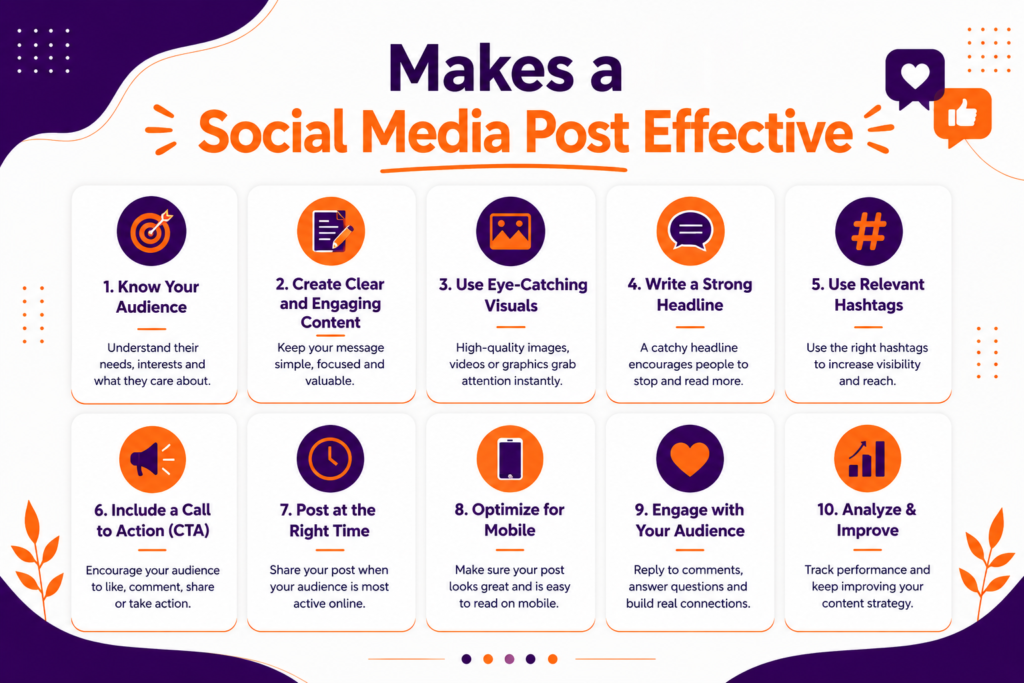
An effective social media post is one that grabs attention fast, communicates a single clear idea, and prompts the reader to act. It blends a strong hook, a clean format, the right visual, and a clear next step.
Why does this matter? People read online in quick scans, not careful lines. Research from the Nielsen Norman Group shows readers skim in an F-shaped pattern and skip dense blocks of text. So your post has to deliver value in the first second.
Here is how to do it: keep one goal per post, lead with the hook, break up the text, and make the action obvious. The checklist below turns that into steps you can repeat.
Also Read This:- 11 Healthcare Social Media Marketing Strategies
The 10-Point Social Media Post Checklist
Before any post goes live, run it through these ten checks. They apply across Instagram, Facebook, LinkedIn, and X, with small tweaks per platform.
1. Lead With a Strong Hook
The first line is your headline. It decides whether people stop or scroll. Make it specific and curiosity-driven.
Hook styles that work:
- Numbers: “7 ways to cut your ad costs this month.”
- Questions: “Still posting at the wrong time?”
- Promise: “The one habit that doubled our reach.”
- Urgency: “Fix this before your next campaign.”
- Emotion: “We almost gave up on Reels. Here’s what changed.”
Write three hooks for every post, then pick the sharpest one.
2. Support It With a Clear Second Line
Your second line earns the rest of the read. Use it to expand the hook and tell people what they will get.
Think of the hook as the door and the second line as the invitation inside. Together they set a clear expectation, which keeps people reading instead of bouncing.
3. Use Emojis and Symbols With Purpose
Emojis add warmth and personality, and simple symbols guide the eye. Used well, they make a post feel human and easy to scan.
Handy attention symbols:
- → an arrow points to a link or next step
- ★ a star highlights something special
- ✔ a checkmark signals an actionable tip
One caution: do not overdo it. A wall of emojis looks spammy and can hurt accessibility. Two or three per post is plenty.
4. Add Relevant Hashtags
A hashtag is a clickable keyword that groups your post with others on the same topic, like #DigitalMarketing or #SmallBusiness. It helps new people discover your content. You can read the background on the Wikipedia entry for hashtags.
Modern advice has shifted. Instead of stuffing 30 tags, use 3 to 5 highly relevant ones that match your post and audience. Mix a broad tag with a few niche or local tags for the best reach.
5. Break Up Text With Line Breaks
White space is your friend. Short lines and clear gaps make a post easy to read on a small screen.
Every major platform now supports line breaks, including LinkedIn. Aim for one or two sentences per block, then a gap. Dense paragraphs are the fastest way to lose a reader.
6. Weave In a Quote or Short Insight
A relevant quote or a punchy insight can make a post memorable. It gives readers something to save or share.
Keep it on-topic and genuine. An honest line from your own experience often beats a famous quote, because it sounds like you and builds trust.
7. Always Add a Strong Visual
Visuals are not optional. Posts with images or video earn more shares, clicks, and saves than text-only posts. The visual is often what stops the scroll in the first place.
Quick visual tips:
- Use original photos or clean branded graphics, not generic stock.
- Design for vertical, mobile-first viewing.
- Add short captions or text overlays for sound-off viewing.
- Keep your colours and fonts consistent so people recognise you.
For more creative angles, our guide on creative ways to promote your product on social media pairs well with this step.
8. Add Alt Text for Accessibility
This is the step most brands skip. Alt text describes your image for people using screen readers, and it also gives platforms more context about your content.
Write a short, plain description of what the image shows. It makes your content inclusive and can quietly support discovery. It is a small effort with a real payoff.
9. Shorten and Track Your Links
Long, messy links look untrustworthy and are hard to share. A clean, shortened link feels tidy and is easier to remember.
Use a trusted shortener or a branded short link, and add tracking tags so you can see which posts drive real traffic. That data tells you what to make more of.
10. End With One Clear Call to Action
Every post should ask for one action. Without it, people enjoy your content and move on without doing anything.
Examples of clear CTAs:
- “Save this for your next campaign.”
- “Comment YES if you want the full guide.”
- “Tap the link to read more.”
- “Share this with a teammate who needs it.”
Pick one CTA per post. Asking for too many things at once usually means people do none of them.
Bonus: Post at the Right Time and Stay Consistent
Even a great post underperforms if you publish it when your audience is asleep. Check your analytics to find your active hours, then schedule around them.
Consistency beats bursts. A steady posting rhythm trains both the algorithm and your audience to expect you. For a wider view of how people use each platform, the Pew Research social media fact sheet is a useful reference.
If managing all of this feels like a lot, that is normal. Many of the teams we talk to do great work but lack the time to post daily. That is where a partner helps, through our social media marketing services or focused social media optimization.
Quick Recap: Your Pre-Publish Checklist
Before you hit publish, make sure your post has:
- A strong, specific hook in the first line.
- A clear second line that sets expectations.
- A few purposeful emojis or symbols.
- 3 to 5 relevant hashtags.
- Line breaks and white space.
- A quote or honest insight.
- A strong, mobile-first visual.
- Alt text on the image.
- A short, tracked link.
- One clear call to action.
Run this list every time. Within a few weeks, better posts become a habit, not a hassle.
FAQ Section
What should I include in every social media post?
Every post should have a strong hook, a clear message, a good visual, relevant hashtags, and one call to action. Adding line breaks and alt text makes it easier to read and more accessible. Following a simple checklist keeps your posts consistent and effective.
How many hashtags should I use on a social media post?
Use about 3 to 5 highly relevant hashtags rather than the maximum allowed. Relevance matters more than volume. Mix one broad tag with a few niche or local tags to reach the right audience.
How do I write a good social media hook?
Lead with something specific and curiosity-driven in the first line. Numbers, questions, and bold promises work well. Write a few options for each post and pick the sharpest one before you publish.
Do images really improve social media engagement?
Yes. Posts with strong images or video usually earn more shares, clicks, and saves than text-only posts. The visual is often what stops the scroll, so treat it as essential, not optional.
What is alt text and why does it matter for posts?
Alt text is a short description of an image that screen readers use to help people with visual impairments. It makes your content accessible to more people. It also gives platforms extra context about your post.
When is the best time to post on social media?
There is no single best time for everyone. Check your own analytics to find when your audience is most active, then schedule posts around those hours. Consistency over time matters more than any single perfect slot.
How often should a business post on social media?
Quality and consistency beat raw volume. For most small businesses, a steady rhythm of a few strong posts per week works better than daily low-effort posts. Pick a pace you can maintain and stick to it.