
Most local businesses waste months chasing links that never come. The reason isn’t effort — it’s strategy. The 7 tactics below are the ones that consistently work, drawn from hands-on link building work with 100+ local businesses across sectors.
Links remain one of Google’s strongest ranking signals — and for local businesses, the right kind of local link is worth ten times more than a generic directory submission. This guide covers seven practical, low-budget ways to earn high-quality local backlinks that move your rankings and bring real traffic.
What you’ll take away: a clear understanding of what makes a local link valuable, and a shortlist of actionable tactics you can start this week — no agency budget required.
Why Local Link Building Is Different — and More Powerful
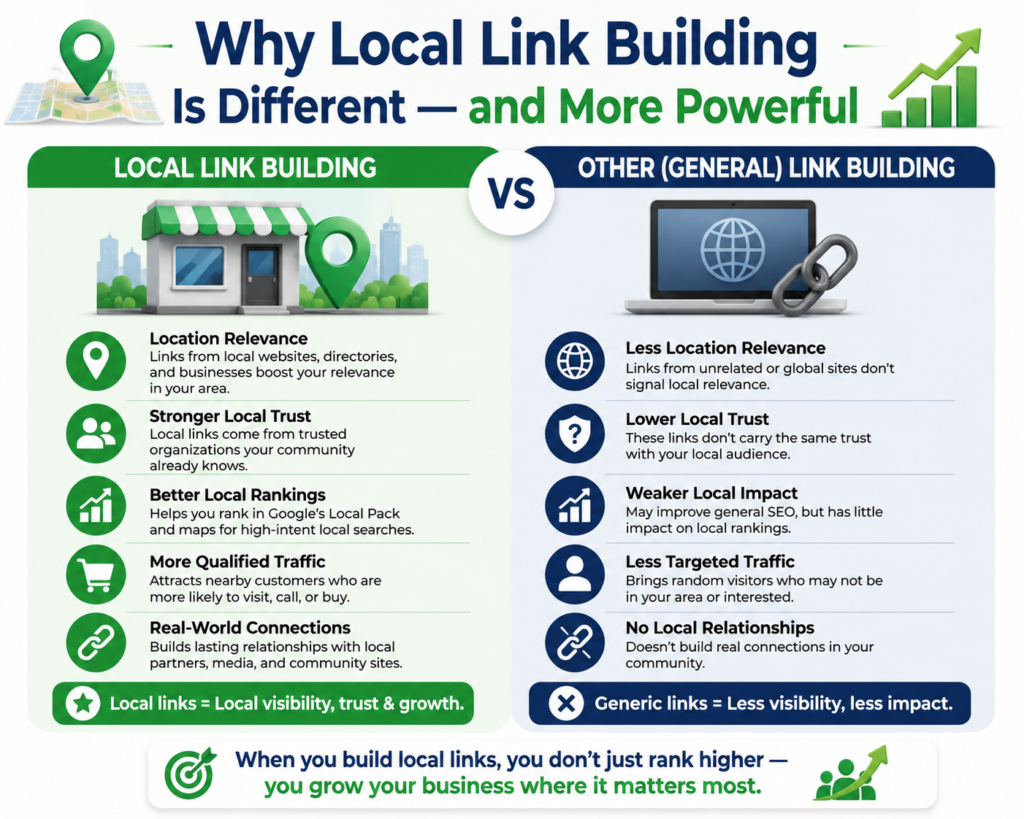
Local link building is the practice of earning backlinks from websites that are geographically or topically relevant to your business location. This includes local news outlets, event sites, community organisations, business associations, and regional directories.
Google uses links to measure authority and relevance. For local search rankings, a link from a local newspaper, a neighbourhood event listing, or your city’s Chamber of Commerce website carries far more weight than a generic link from an unrelated national site.
Why it matters:
- Local links reinforce your geographic relevance to Google — a key signal in the Local 3-Pack algorithm
- They drive qualified referral traffic from people already in your service area
- They build genuine community presence, which compounds into more mentions, reviews, and brand recognition over time
- They are harder for competitors to replicate quickly, making them a durable competitive advantage
This guide is useful for any business — local service provider, e-commerce brand, or B2B agency — that wants to strengthen its website’s authority by earning links from locally relevant, high-trust sources.
7 Local Link Building Strategies That Deliver Results
1. Create Controversy — and Get Into Local News

If you want fast, high-authority links, getting coverage in local media is one of the most effective routes available. Local journalists are constantly looking for stories. If your business has a strong opinion, an unusual approach, or a genuinely newsworthy angle, pitch it.
What makes something newsworthy enough to earn a local press link?
- A business decision that runs counter to industry convention (e.g., refusing a major contract for ethical reasons)
- Unusual community involvement or a strong local stand on a relevant issue
- Data or research you’ve conducted about local consumer behaviour in your industry
- A distinctive business milestone that reflects local growth
You don’t need to manufacture drama. Authenticity reads well to journalists and to the community. A thoughtfully worded press release sent to 5–10 local journalists can land you a link from a regional news site with high domain authority — the kind that takes most businesses months of outreach to earn otherwise.
A note from our experience: businesses that were open to sharing their genuine perspective on local industry challenges consistently got more coverage than those pitching purely promotional stories. Journalists link to insight, not ads.
2. Win or Get Nominated for Local Awards and Contests
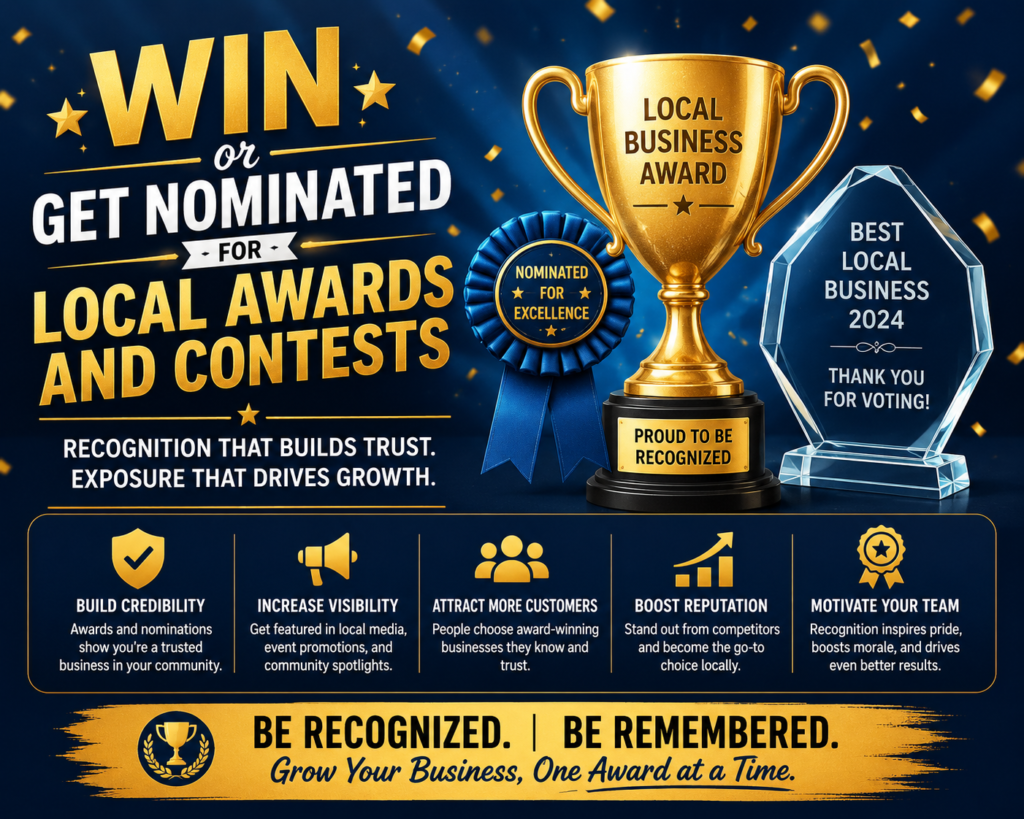
Contest nomination links are backlinks earned when a business is nominated for — or wins — a local award, competition, or recognition programme. These links come from the event or contest organisers’ websites, which are often local news platforms, industry associations, or community portals with solid domain authority.
This strategy is underused and low-cost. Here’s how to approach it:
- Search for “best businesses in [your city]” awards, “[industry] business of the year [city]”, and local readers’ choice contests
- Submit a nomination for your own business — most contest organisers welcome self-nominations and publish the full nominee list with links
- Even if you don’t win, being listed as a finalist typically earns you a backlink from the contest page
- Promote the nomination to your customers and ask them to vote — this engagement often results in social shares that generate additional organic links
Awards from your local Chamber of Commerce, city business associations, and industry bodies are particularly valuable because these organisations typically have well-established, high-authority websites.
For Indian businesses, look at state-level MSME awards, startup recognition programmes by bodies like the Ministry of MSME, and city-level business excellence awards — all of which generate backlinks to nominees and winners.
3. Sponsor a Local Meetup or Professional Group
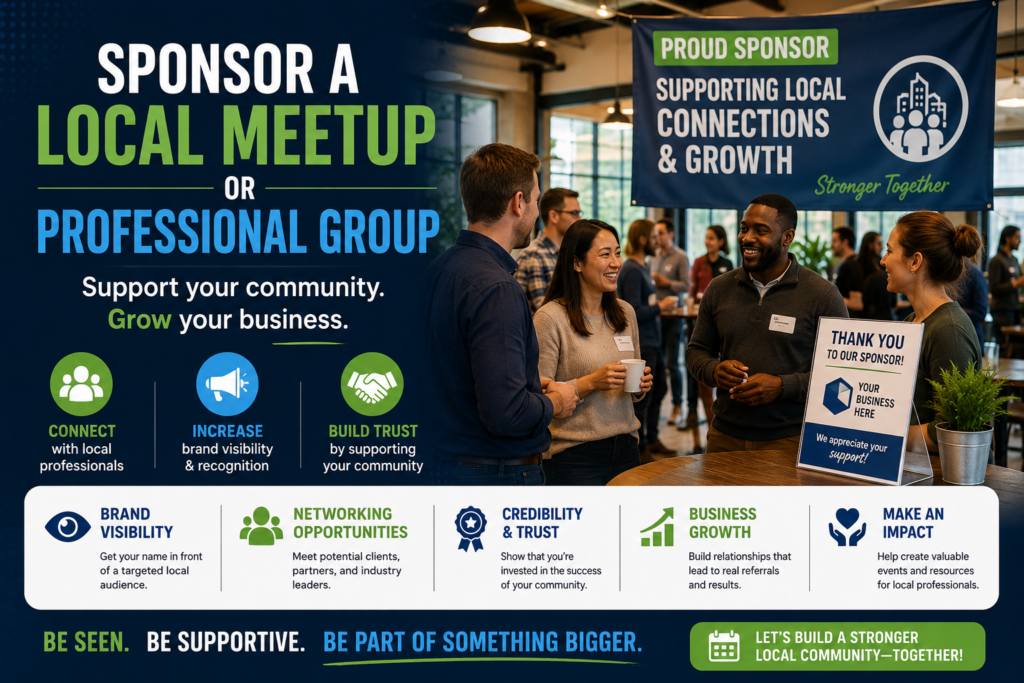
Meetup groups, professional networking events, and industry gatherings happen in every city. They almost always publish a sponsor list on their event pages — and those pages get traffic, shares, and links from attendees.
Sponsoring a meetup is typically low-cost (often ₹3,000–₹15,000 for small to mid-sized events) and delivers multiple benefits simultaneously:
- A backlink from the meetup or event website
- Brand visibility in front of a pre-qualified audience (the meetup’s members)
- An opportunity to present or demonstrate your service in person
- Social media tags and mentions from the event organisers and attendees
Start by searching for relevant groups in your city on platforms like Meetup.com or LinkedIn Events. Look for groups whose membership overlaps with your target customer profile. A digital marketing agency in Jaipur, for example, would benefit from sponsoring a startup founder meetup, a small business owners’ group, or a tech community event.
Once you’ve identified a few targets, reach out directly to the organiser. Offer to sponsor one event and measure the link and traffic results before committing to more.
4. Host a Community Event (Even a Small One)
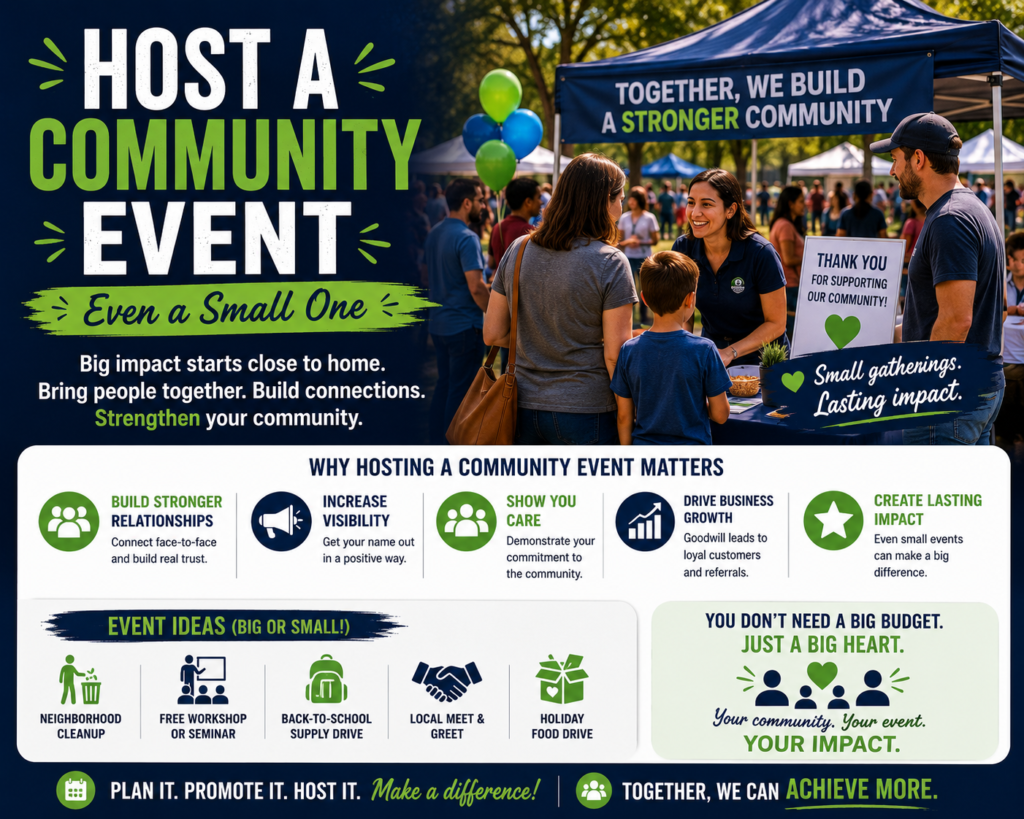
You don’t need a large budget or a venue to host an event that earns links. Community events — workshops, free skill sessions, charity drives, neighbourhood clean-ups, or even an online panel discussion — consistently generate links from local event listing sites, community boards, and local news when properly promoted.
Why hosting works for link building:
- Event listing websites (Eventbrite, local city portals, community boards) almost always link back to the organiser
- Local journalists actively look for community events to cover — an interesting event gets you editorial coverage and a link from a news site
- Participants often blog about or share events they attend, creating additional organic links and social mentions
The event doesn’t have to be directly related to your business. A law firm hosting a free legal advice morning for local residents. A restaurant hosting a cooking class for schoolchildren. A marketing agency running a free Instagram workshop for local small businesses. The connection to your business strengthens your brand; the community value is what earns the link.
Once your event is confirmed, submit it to at least 5 local event listing sites and send a brief email to local news desks. That two-step process alone can generate 3–8 links from a single event.
5. Sponsor or Donate to a Local Club, School, or Organisation
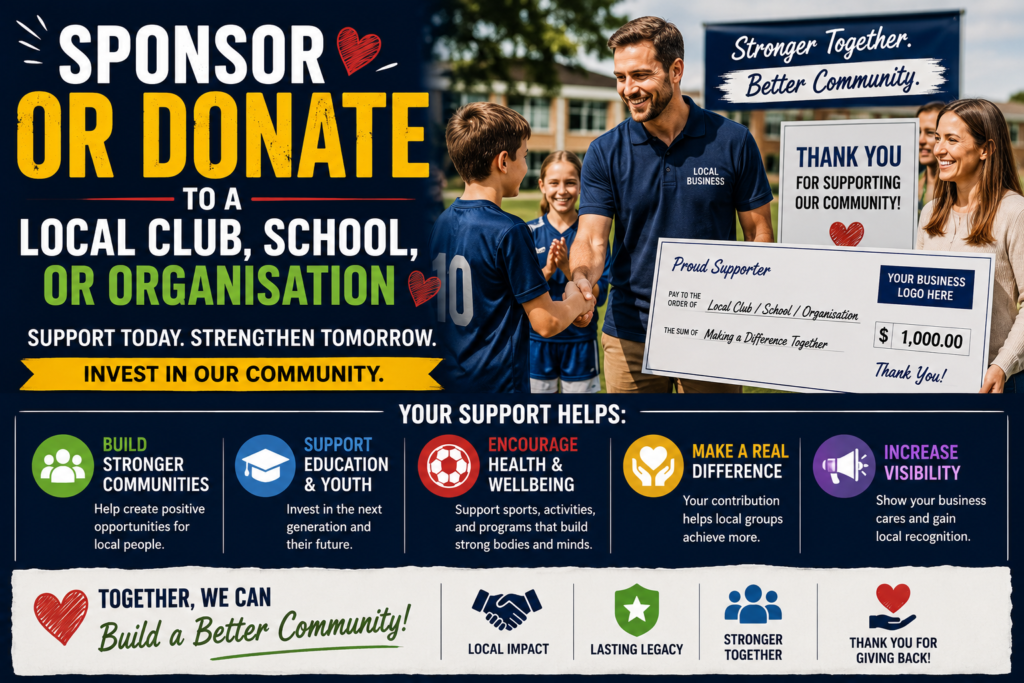
Sponsorship and donation links are among the most reliable and straightforward tactics in local link building. Schools, sports clubs, non-profit organisations, cultural associations, and charities regularly list their sponsors and donors on their websites — and those listings include a backlink.
A few examples from the Indian context our team has seen work well:
- Sponsoring a local school sports day or science fair — schools almost always publish sponsor names and links on their event pages
- Supporting a local cultural festival — events like Jaipur Literature Festival, city-level food fests, or cultural melas publish sponsor pages that persist long after the event
- Donating to a registered NGO or charitable trust — many publish donor recognition pages on their websites
- Partnering with a local RWA (Resident Welfare Association) event — community websites frequently list contributors
The key is to ensure the organisation has a legitimate, indexed website with a functioning links page before you commit. A quick check with a tool like Ahrefs’ free backlink checker or even just a Google search of the organisation will confirm whether their site is worth pursuing.
Even a ₹5,000 local sponsorship can earn you a do-follow backlink from a site that’s been indexed and trusted by Google for years — something that would cost significantly more to acquire through traditional outreach.
6. Build and Promote a Local Resource
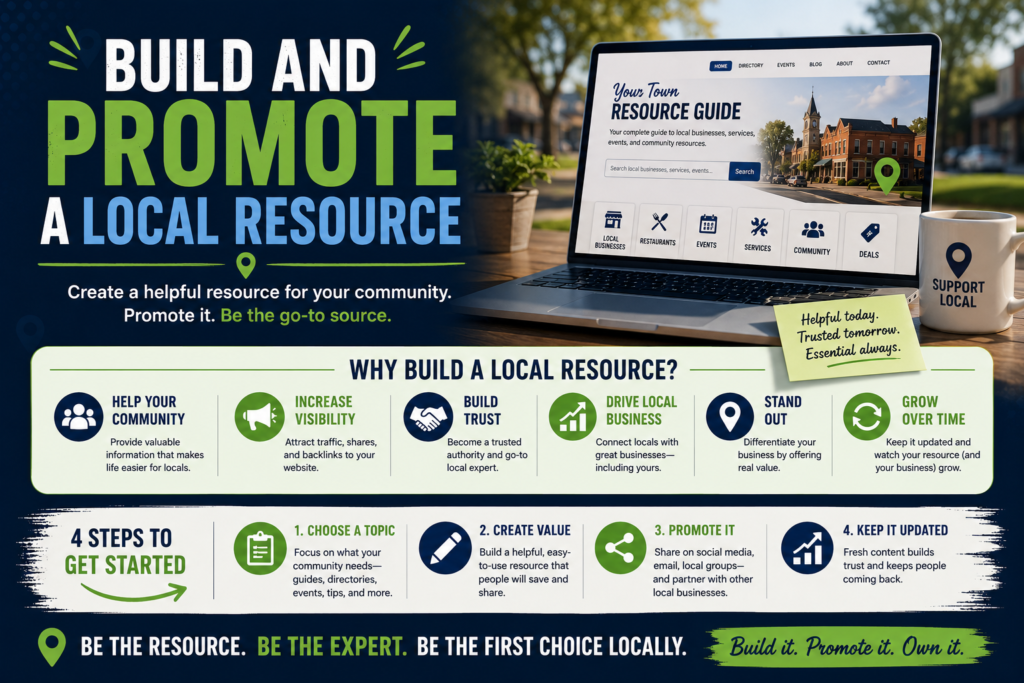
A local resource is a piece of content on your website that provides genuine value to people in your city or region — and that other local websites naturally want to link to because it makes their audience’s lives easier.
This is one of the most scalable local link building tactics because the links compound over time. Once a resource is live and well-promoted, it continues to earn links passively.
Local resource ideas that have earned consistent backlinks for our clients:
- A comprehensive guide to a local industry: “The Complete Guide to Getting Planning Permission in Jaipur”
- A curated directory of local services: “Best Free Co-Working Spaces in Jaipur” or “Verified Plumbers in Civil Lines”
- A data report using local statistics: “Small Business Survey: How Jaipur Retailers Performed in 2024”
- A community calendar or events round-up for your city or neighbourhood
Once the resource is live, promote it actively. Email local bloggers, journalists, and community organisations. Share it in local Facebook groups and WhatsApp communities. Submit it to local news desks as a resource story. The more people see it, the more organic links it earns.
For a deeper look at how content strategy supports local SEO, read our guide on the importance of local SEO for small businesses.
7. Build Genuine Relationships with Local Influencers

Local influencers — bloggers, journalists, YouTubers, Instagram creators, community leaders, or even respected business owners — have audiences that trust them. When they mention or link to your business, those links carry authority, generate real traffic, and signal to Google that your brand is part of the local fabric.
A local influencer is any individual with an established online audience in your city, neighbourhood, or niche who has the ability to write about, mention, or link to your business in a way that reaches your target customers.
How to identify and build relationships with local influencers:
- Search Instagram, YouTube, and local blogs for content creators covering your city’s food, lifestyle, business, or culture scenes
- Look at local journalists who regularly write about small businesses or startups in your area
- Identify well-followed local community figures — politicians, educators, NGO leaders — whose audiences overlap with yours
- Follow, engage authentically with their content, and offer genuine value before asking for anything
The mistake most businesses make is approaching influencers transactionally from the first contact. Relationships built over time — even just a few months of genuine engagement — result in far stronger, more natural links than cold outreach.
One effective approach: invite a local influencer to your event, offer them a genuine product or service experience, and let them share it organically. If the experience is good, the coverage — and link — follows naturally.
For more on how influencer relationships fit into your broader digital strategy, explore our influencer marketing services.
Who Should Prioritise Local Link Building?
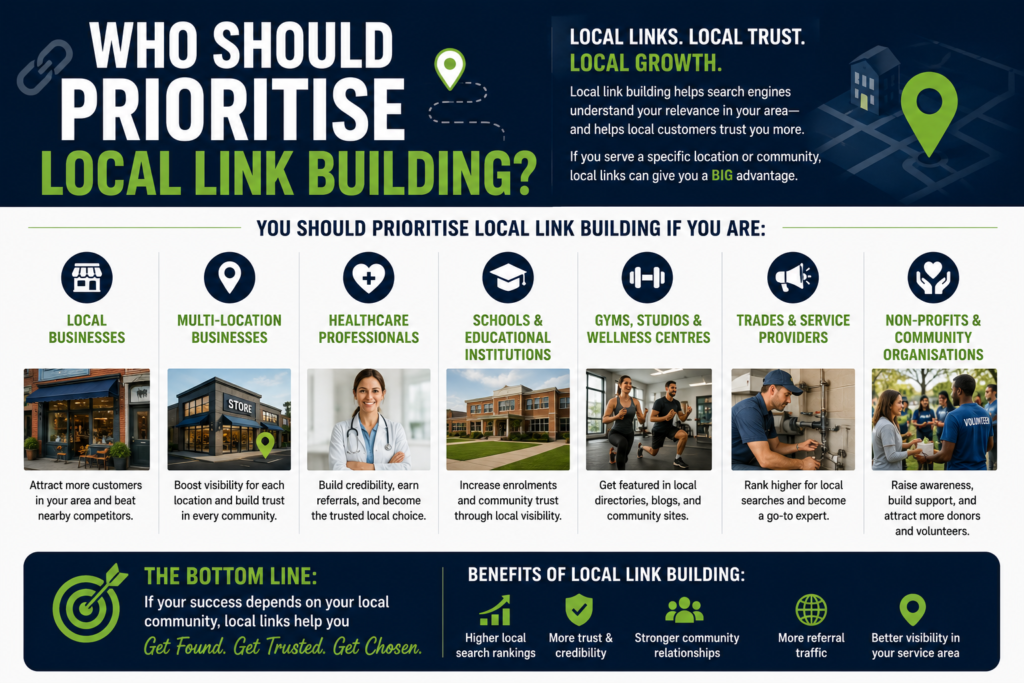
Local link building is not just for businesses with a physical shopfront. It is valuable for any organisation that wants to improve its website’s authority using locally relevant, high-trust sources. This includes:
- Local service providers (lawyers, doctors, contractors, agencies)
- E-commerce brands targeting a regional customer base
- B2B businesses that serve clients within a specific city or region
- National brands with local branches or franchises
- Non-profits and educational institutions building credibility
If you’re investing in local SEO and not yet building local links, you are leaving one of the most powerful ranking levers untouched. The seven tactics above don’t require large budgets — they require creativity, consistency, and genuine community involvement.
To understand how local link building fits into your complete local SEO strategy, read our detailed guide on 10 ways to optimise your website for local SEO.
Quick Reference: Local Link Building Checklist
- Identify 3–5 local news journalists and prepare a newsworthy story pitch
- Search for local business awards and submit nominations this quarter
- Find 2–3 relevant local meetup groups and contact organisers about sponsorship
- Plan one community event — workshop, webinar, or charity drive — and list it on 5 event sites
- Identify 3 local organisations (schools, clubs, NGOs) to sponsor or donate to
- Create one high-value local resource page and actively promote it to local blogs and news sites
- Identify 5 local influencers, follow them, and begin genuine engagement this week
Aim to execute two or three of these each quarter. Consistent, compounding effort produces far better results than a burst of activity followed by months of inaction.
According to Google’s Search Quality Rater Guidelines, E-E-A-T (Experience, Expertise, Authoritativeness, and Trustworthiness) is heavily influenced by the quality and context of links pointing to your site. Local, relevant, editorial links are among the strongest E-E-A-T signals available to local businesses.
Frequently Asked Questions
What is local link building and why does it matter for SEO?
Local link building is the process of earning backlinks from websites that are geographically or topically relevant to your business location — such as local news sites, community organisations, event platforms, and regional directories. It matters because Google uses these links to assess your site’s authority and local relevance, both of which directly influence your rankings in local search results and the Google Maps Local 3-Pack.
How many local links do I need to improve my rankings?
There is no universal minimum. The number of links required depends on the competitiveness of your local market and the quality of your competitors’ link profiles. In less competitive local markets, 10–15 high-quality local links can produce meaningful ranking improvements. In competitive categories like legal or medical services in major cities, more volume and higher-authority sources are required. Quality consistently matters more than quantity — one link from a trusted local news site outweighs 50 low-quality directory submissions.
What is the difference between a local link and a general backlink?
A general backlink comes from any website, regardless of its geographic or topical relevance to your business. A local link comes from a source that is specifically relevant to your city, region, or local industry. For Local SEO purposes, local links carry stronger geographic relevance signals, which directly impacts your visibility in location-based searches. Both types contribute to your overall domain authority, but local links provide the specific signal that helps you rank in local queries.
Are sponsorship links considered legitimate by Google?
Yes, sponsorship links are legitimate provided they are earned genuinely through actual sponsorship of a real event or organisation — not purchased simply for a link. Google’s guidelines require that paid or reciprocal links be tagged with rel=”sponsored” or rel=”nofollow”, but genuinely earned sponsorship links (where your support is real and the listing is editorially placed by the organisation) are considered natural by Google and contribute positively to your authority.
How do I find local events to sponsor for link building?
Start with a Google search for “[your city] events 2025”, “[your city] business awards”, or “[your city] [your industry] meetup”. Check platforms like Meetup.com, Eventbrite, and local Facebook groups. Contact your city’s Chamber of Commerce, local schools, and registered NGOs directly. Most will be receptive to sponsorship enquiries, especially when approached with a clear, genuine offer.
Is building a local resource page worth the effort?
Yes — and it is one of the most scalable tactics available. A well-constructed local resource page earns links passively over months and years after the initial promotion effort. The key is creating something genuinely useful to your local audience: a guide, a curated list, a data report, or a community calendar. Generic or thin resource pages do not attract links. The more specific and useful the resource is to your local community, the more naturally it earns links from blogs, news sites, and community platforms.
How long does local link building take to impact rankings?
Google typically crawls and indexes new links within a few weeks of them going live. The impact on rankings usually becomes visible within 4–12 weeks of consistent link acquisition, depending on how competitive your local market is. Links from high-authority sources (local news sites, established organisations) tend to register faster. Link building is cumulative — the benefits grow as your link profile strengthens over time, which is why consistency matters more than any single campaign.
Which Tactic Will You Try First?
Seven strategies. All of them proven. None of them require a massive budget — just a bit of planning and genuine community involvement.
If you’re just starting out, the easiest wins are sponsorship links and award nominations. Both can be researched and actioned in a single afternoon. If you’re ready to go deeper, building a local resource page or hosting an event will compound links for you for months.
Tried any of these and got a result worth sharing? Or stuck on a specific step? Drop your question or experience in the comments below — our team reads every one and you might just help another business owner in the same boat. ↓
If you want a professional review of your current backlink profile and a tailored local link building plan, we offer a no-obligation audit:
→ Request a free local SEO and backlink audit from G2S Technology
Also worth reading:
→ 10 Ways to Optimise Your Website for Local SEO (2026 Guide)
→ How to Optimise Your Google Business Profile for Maximum Local SEO→ Biggest SEO Link Building Mistakes to Avoid in 2026