
Billions of people scroll social media every day, and many discover products there before they ever open Google. So how does that activity actually help your online store rank and sell?
In this guide, you will learn the real role of social media in e-commerce SEO, how the two connect, and how to use social media to grow traffic and sales. We have shaped this from 100+ business conversations our team has had with founders and store owners.
No hype about “secret ranking hacks.” Just how it genuinely works.
What Is E-commerce SEO, and Where Does Social Media Fit?
E-commerce SEO is the practice of optimising an online store so it ranks higher in search results and attracts organic traffic that converts into sales. Social media is a channel that supports and amplifies that work.
Social media marketing is the use of platforms like Instagram, Facebook, LinkedIn, X, and Pinterest to build an audience, share content, and drive people to your store. On their own, they are two disciplines. Together, they compound.
Also Read This:- Online Game Promotion: A Beginner’s Guide to Getting Your Game Downloaded
Does Social Media Directly Improve SEO?
Here is the honest, accurate answer: social media does not directly boost your Google rankings. Google has said that social signals like likes and shares are not a direct ranking factor.
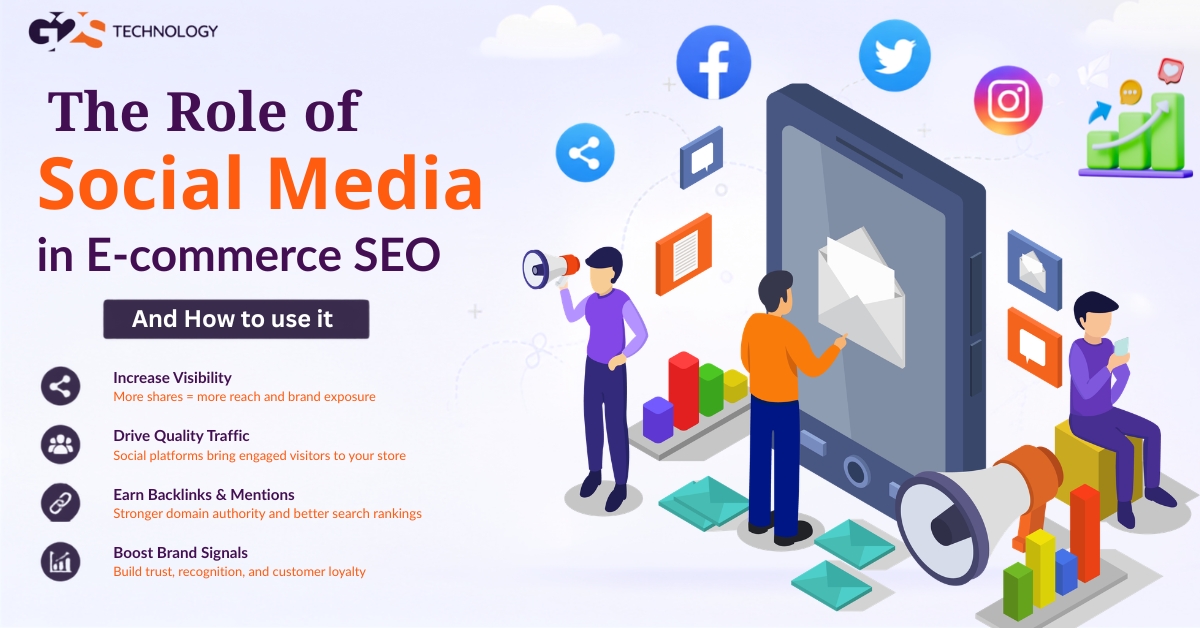
But social media helps your SEO indirectly, and powerfully, by:
- Driving traffic: clicks from social bring visitors who can engage and convert.
- Boosting discovery: more people find your content, and some link to it naturally.
- Earning backlinks: popular content gets picked up by blogs and publishers, which does help SEO.
- Building brand searches: people who see you on social later search your brand by name, a signal Google values.
So treat social as a discovery and demand engine that feeds your SEO, not a shortcut to rankings. For the search side, our e-commerce SEO services handle the on-site work.
Why Social Media Matters for E-commerce
Even setting rankings aside, social media is one of the strongest growth channels an online store has. Here is what it delivers.
Increased Brand Visibility and Awareness
Social platforms let you showcase your brand and products to a huge audience. Engaging profiles and valuable content put you in front of people who have never heard of you, which widens the top of your funnel.
Targeted Audience Engagement
Through hashtags, communities, and precise ad targeting, you can reach people with a genuine interest in what you sell. That focus tends to lift conversion rates and build loyalty.
More Website Traffic and Conversions
Social acts as a gateway to your store. With clear links and strong calls to action, you turn scrollers into visitors, and an optimised site turns those visitors into buyers. Our guide on boosting website traffic with social media digs into this.
How to Leverage Social Media for E-commerce SEO
Knowing the connection is one thing; using it well is another. These are the tactics that actually move the needle.
1. Create Engaging, On-Brand Profiles
First impressions count. Build profiles that reflect your brand with high-quality images, a clear cover, and a consistent voice. A polished profile earns trust before anyone clicks through.
2. Share High-Quality, Useful Content
Content is what earns attention and shares. Mix product updates, tips, tutorials, industry news, and user-generated posts so you inform and entertain, not just sell.
Consistently helpful content positions you as a trusted name in your niche. Our content marketing services can help you plan and produce it.
3. Use Social Media Advertising
Paid social reaches beyond your followers to precise audiences by demographics, interests, and behaviour. Even a modest budget can drive targeted traffic and sales. Our Meta ads team can set this up around your goals.
4. Partner With Relevant Influencers
Influencers lend reach and credibility. When a trusted creator features your product, it drives visibility, referral traffic, and often genuine backlinks and brand searches.
Choose creators whose audience matches your customers, and prioritise relevance over follower count. Our influencer marketing team can find the right partners.
5. Track and Analyse Your Metrics
You cannot improve what you do not measure. Track engagement, reach, click-through rate, and conversions, and use UTM tags so Google Analytics shows exactly which posts drive store traffic.
Let the data guide your next move, then double down on what works.
Best Practices for Social Media and E-commerce SEO
To get the most from the connection, keep these habits in mind.
- Stay consistent across platforms: same logo, colours, and voice build recognition and trust.
- Optimise your profiles: use relevant keywords in bios, headlines, and descriptions so profiles surface in search.
- Use relevant keywords and hashtags: a focused set of 3 to 5 relevant tags beats stuffing dozens.
- Build relationships: engage genuinely with influencers, industry leaders, and communities to expand reach.
- Encourage user-generated content: reviews, testimonials, and reshares add social proof and authenticity.
Pair these with strong on-page SEO so the traffic you earn actually converts.
Challenges and Limitations to Keep in Mind
In the interest of honesty, social media is not effortless. Go in aware of these realities.
- It is highly competitive: standing out in a crowded feed takes genuinely good content.
- Algorithms change often: organic reach shifts, so strategies need regular updates.
- It is time and resource intensive: managing platforms and content well takes real commitment.
- Negative feedback is public: complaints are visible, so handle them promptly and professionally.
- ROI can be hard to measure: the SEO impact is indirect, so set clear goals and track the right metrics.
None of these are dealbreakers. They are simply reasons to approach social media with a plan rather than guesswork.
Final Thoughts
Social media will not magically lift your rankings, but it fuels almost everything that does: traffic, discovery, backlinks, and brand searches. Used with intent, it makes your whole e-commerce SEO effort stronger.
Start by tightening your profiles, sharing genuinely useful content, and tracking results with UTM tags. Adapt as platforms evolve, and the compounding pays off over time.
FAQ
Does social media directly improve SEO for e-commerce?
No, not directly. Google has said social signals like likes and shares are not a direct ranking factor. But social media helps indirectly by driving traffic, earning backlinks, and increasing brand searches, all of which support SEO.
How does social media help an online store?
Social media builds brand awareness, engages a targeted audience, and drives traffic to your store. It also fuels discovery and word of mouth that can lead to natural backlinks. Combined with good on-site SEO, it lifts both visibility and sales.
Which social platforms are best for e-commerce SEO?
It depends on where your audience is most active. Instagram, Facebook, Pinterest, LinkedIn, and X are all popular for e-commerce. Research your customers, then focus your effort on the one or two platforms that fit best.
What content works best for e-commerce on social media?
Mix product updates, tips, tutorials, videos, behind-the-scenes posts, and user-generated content. Diverse, useful content keeps your audience engaged rather than just selling to them. Tailor it to what your specific audience prefers.
How does influencer marketing help e-commerce SEO?
Influencers expand your reach and lend credibility with audiences that trust them. Their posts drive referral traffic and can generate genuine backlinks and brand searches. Choose creators whose audience matches your customers for the best results.
How do I measure social media’s impact on my store?
Add UTM tags to your social links and review the results in Google Analytics. Track engagement, reach, click-through rate, and conversions. This shows which posts and platforms actually drive store traffic and sales.
Is social media worth it for small e-commerce brands?
Yes, especially for building awareness on a budget. You can start on one platform, post consistently, and grow from there. The key is a clear plan and steady effort rather than trying to be everywhere at once.